
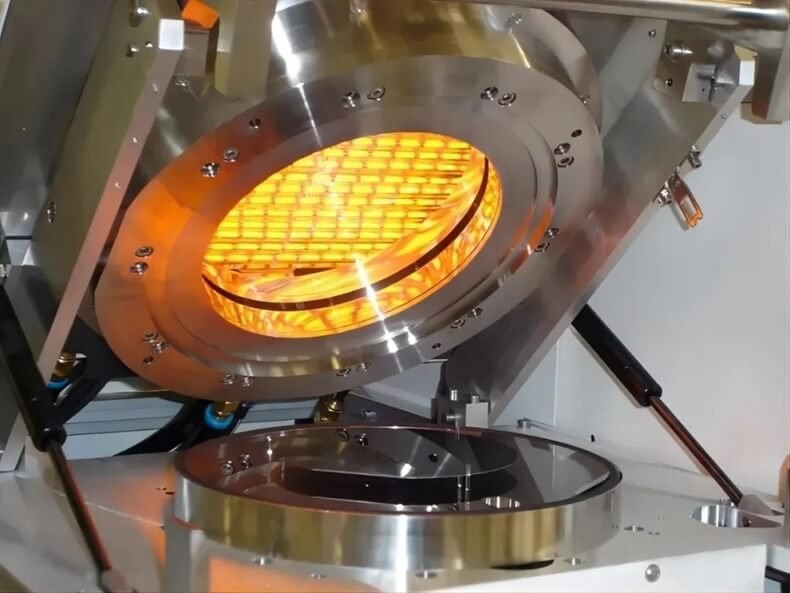
On the fab floor, thermal excursions are the quiet yield killers you can’t always see. A 0.5°C drift during photoresist soft bake? That moves CDs. Leave moisture behind after cleaning and you’re asking for microbridging. In packaging, uneven cure shifts warpage and reliability. You need heat that holds its line—inside the chamber atmosphere you set. What matters, technically We build controlled-atmosphere bake lamps around repeatable temperature and clean execution. Short-wave halogen elements give you fast, responsive heating with tight spectral control, so wafer-level uniformity holds within ±0.1°C across the bake zone. Quartz assemblies and low-outgassing fixtures keep particle generation at zero, keeping you inside cleanroom Class 1–100. The system holds setpoint under nitrogen or dry air purge, so moisture and oxygen stay out. Integrated feedback keeps the thermal profile the same run after run, with traceable records for lot-to-lot control. Why it works where you run it This lamp belongs wherever thermal precision defines the process: wafer drying after cleaning, photoresist soft bake and hard bake before lithography, and package curing for mold compounds and underfills. You get shorter ramp-to-soak times, lower energy per batch, and fewer scrap wafers from edge bead or solvent retention. The process window opens because the bake curve matches intent—no drift. Stable atmosphere control also cuts surface oxidation and contamination, so adhesion and yield improve across the line. The practical details you’ll want to plan for Installation means matching the tool’s purge and exhaust interfaces, and isolating the lamp from vibration paths that can couple into the substrate. After a lamp replacement, expect a brief thermal soak-in before the uniformity calibration settles. Schedule maintenance around lamp end-of-life to avoid unplanned downtime, and confirm your gas supply meets the dew point specification for the process.