
Getting Thermal Energy Right in Your Smart Fab
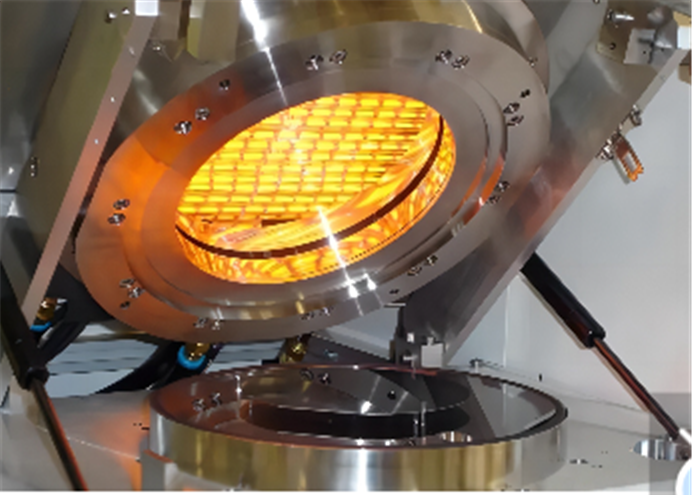
If you’re planning a smart Fab, you’ve probably realized that the old way of handling heat just doesn’t cut it anymore. You can’t just “turn up the heat” and hope for the best. You need a system that actually talks back to you. Most of us lean on high-efficiency infrared (IR) systems for wafer heating. It makes sense. It’s non-contact, it’s precise, and it just works. But here’s the trick: the distance between your IR source and the wafer is everything. Get it wrong, and you’re looking at ruined substrates.
The Sweet Spot: IR Physics and Safety
It all comes down to how the heat actually hits the wafer. If you push the lamp too close, you’ll get these nasty localized hot spots. That leads to thermal stress, and nobody wants that. But if you pull it too far back? You start losing energy to the chamber walls. Suddenly, you’re cranking the wattage just to make up for the waste, which is basically throwing money away. We usually look at the heat flux and the lamp’s spectral output to find that “goldilocks” zone. Short-wave IR is a lifesaver here. It digs deeper into the material, so you can keep a larger gap without losing those fast ramp-up times.
Making it “Smart”
Hardware is great, but the real magic is in the feedback loop. We hook the IR systems up to real-time pyrometers and PLC controllers. This means you can watch the surface temperature and tweak the power in milliseconds. It’s a huge relief. If a wafer comes in a bit thicker or the material is slightly different, the system just handles it on the fly. You don’t have to babysit it.
The Trade-offs (Because there’s always a catch)
Here is the reality: high-density IR arrays are fast. Really fast. But they throw off a ton of waste heat. You can’t just ignore the cooling side of things. If your heat sinks or chilled water loops aren’t beefy enough to handle the ambient rise, your electronics will start to drift. Or worse, they’ll just burn out. It’s a balancing act. You’re trading raw power for stability. To get that pinpoint precision, you have to find the right middle ground between how intense the lamp is and how much room your cooling gear takes up.