
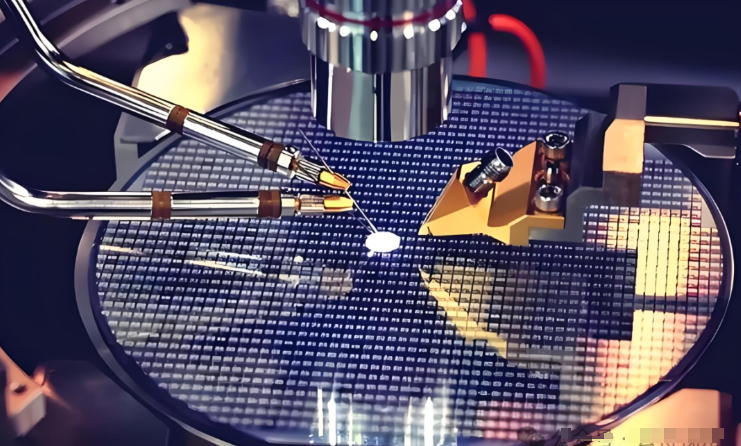
On the fab floor, a photoresist bake profile that drifts even half a degree can take a whole lot of wafers with it. Soft bake and hard bake aren’t just “heat steps.” They set linewidth control and yield. If your heater is underperforming, you’ll see non-uniform critical dimension, edge bead, and a lot of scrap. What matters technically We build our semiconductor machinery spare parts heaters around short-wave infrared elements that give you sub-millimeter thermal field uniformity. Temperature across the wafer repeats, and the bake window stays in spec, lot after lot. The design respects cleanroom reality: Class 1–100 compatibility, zero particle generation, and materials chosen to keep contamination out of the process. Precision isn’t a slogan—it shows up as stable, repeatable profiles that keep photoresist behavior consistent. Why it works in lithography Lithography runs on thermal budget discipline. This heater stabilizes soft bake and hard bake, so excursions and rework drop. You get more predictable line-end shortening, lower defect density, and fewer unplanned stops. Energy use falls because the infrared response is fast and efficient—quick ramp-up with minimal overshoot. Reliability is built for 24/7 operation, so you spend your time running wafers, not chasing temperature drift. Things to keep straight Matching the heater to the tool matters. Check mounting geometry, aperture dimensions, and connector interfaces before install; misalignment will cost you uniformity. The heater performs best when reflectors and insulation are intact, so plan preventive maintenance to keep the thermal path consistent. Expect a short break-in after swap-in to confirm the profile matches your recipe.