
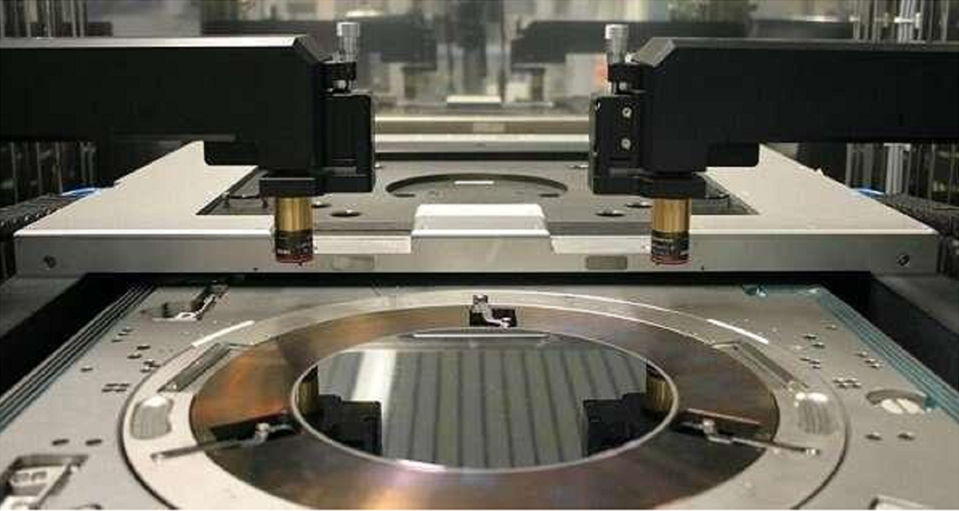
Out on the lithography floor, the wafer comes off the final rinse and the clock starts. Conventional drying leaves behind water marks, thin films, and particles you can’t see — until they show up as defects in the photoresist. In a 300mm fab running Class 1 cleanliness, that isn’t a risk. It’s yield walking out the door. What matters under the hood We built the wafer drying infrared heater around short-wave NIR. It dumps energy straight into the water film, fast — response under 50ms. Thermal uniformity across the wafer holds at ±0.1°C, so you don’t get hot/cold spots that mess with photoresist reflow after soft bake and hard bake. The emitter arrays sit behind sealed quartz, with a low-outgassing, particle-free interface, and the platform is cleanroom-compatible down to Class 1–100. Repeatability comes from closed-loop control that tracks setpoint within 0.5%, even running 24/7. In multi-cluster deployments, we’ve logged zero unplanned downtime over 18 months. Why this works where it counts Before spin, you need a truly dry wafer. After spin, you need bake profiles you can count on. The infrared heater dries without touching the surface, stripping the last 10–20nm of water without residues that cause scumming or bridging. The same thermal platform handles photoresist soft bake and hard bake with stable profiles, so linewidth control tightens and rework drops. Fewer defects. Less scrap. Cycle time you can plan around. Energy use falls because the heater delivers on-demand, without idling bulk fixtures. Installation needs clean alignment to the process chamber and a dedicated exhaust path to pull out latent solvents during bake. The heater plugs into SEMI-standard tool interfaces, though legacy platforms may need minor mechanical tweaks. Commissioning is short once you tune the recipe to your photoresist stack. In high-throughput lines, set up a schedule to inspect the quartz window — it keeps particle performance where it needs to be.
在光刻车间,晶圆刚完成最终清洗,计时便开始。传统干燥方法会留下水渍、薄膜和不可见的颗粒——直到它们在光刻胶中显现为缺陷。在运行Class 1洁净度的300mm晶圆厂,这不是风险,而是良率流失。 核心关键 我们基于短波近红外(NIR)构建了晶圆干燥红外加热器。它将能量直接快速传递到水膜中,响应时间低于50ms。晶圆上的热均匀性维持在±0.1°C范围内,避免软烘烤和硬烘烤后光刻胶流动出现冷热不均的问题。发射阵列位于封闭的石英玻璃后方,接口低逸散、无颗粒,平台兼容洁净室环境,可达Class 1–100。重复性通过闭环控制实现,设定点偏差控制在0.5%以内,即使24/7持续运行也稳定。在多集群部署中,18个月内无任何计划外停机记录。 关键性能背后的原因 旋涂前,需确保晶圆完全干燥;旋涂后,则需要可靠的烘烤曲线。红外加热器无接触干燥,去除最后10–20nm的水膜,不产生导致污点或桥连的残留物。相同热平台可稳定执行光刻胶软烘烤和硬烘烤,线宽控制更精确,返工率降低。缺陷减少,废品率下降,工艺周期可预期。由于加热器按需供能,无需空闲保持大功率装置,能耗得以降低。 安装时需与工艺腔室精确对齐,并配置专用排气路径以排出烘烤过程中的潜在溶剂。加热器支持SEMI标准设备接口,旧平台可能需小幅机械改动。调试时间短,调配好光刻胶配方后即可投入使用。在高产线中,应安排定期检查石英窗口,保证颗粒性能符合要求。