
Getting Thermal Control Right for Hydrogen Sensors
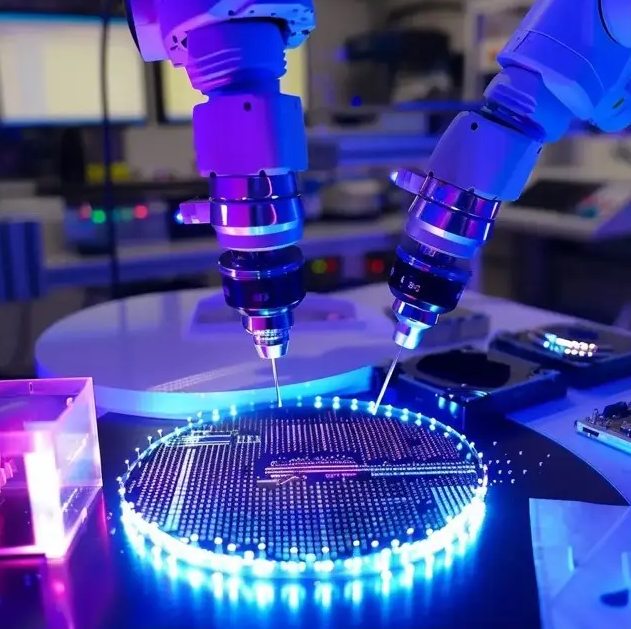
Making hydrogen sensors is a balancing act. You’re working with tiny thermal windows, and if you miss the mark, the whole batch is scrap. That’s why we lean on short-wave infrared (IR) systems. When you need to heat and cool thin films or cure substrates fast, IR is the way to go. In a Smart Fab setup, these heaters do the heavy lifting. The best part? The heat goes straight into the workpiece. You aren’t wasting energy trying to warm up the entire chamber just to get one wafer to the right temperature.
Smart Heaters, Better Data
We don’t believe in “dumb” heaters that are either on or off. That’s old school. We build these systems to play nice with your digital setup. By using PID controllers and real-time feedback, you can see exactly what’s happening—every wattage spike, every temperature shift—right across the wafer. It’s a huge relief because you can catch a drift in production and fix it before you burn through an entire batch.
Why we stick with IR
Let’s be honest: conductive heating takes forever. Convection? It’s just too sloppy. IR is different. It’s a direct hit. We use high-intensity emitters that target the specific absorption bands of your sensor materials. This keeps your heating zone small and kills the long wait times for warm-ups. It’s fast. Really fast. And that means you’re pushing more units through every single shift.
The Trade-offs (The “Gotchas”)
Here’s the thing: when you pack that much power into a small area, things get hot. Fast. While that speed is great for fabrication, it puts a lot of pressure on your cooling manifolds. If your cooling isn’t up to the task, you’ll start seeing “thermal creep” messing with your sensitive electronics. It’s a headache you don’t want. To avoid that, we suggest a dedicated chilled water loop. It keeps the rest of the fab stable while the IR does its thing. Just plug the whole system into your SCADA. Once you have that visibility, keeping tight tolerances across thousands of sensors becomes a lot less stressful.