
A Better Way to Handle Heat in Bio-Sensor Fabrication
When you’re building bio-sensors, the curing and dehydration process is where things usually get tricky. You need everything to be just right, or you risk ruining the membrane integrity. For a long time, we all just used convection ovens. But honestly? Heating up a massive volume of air just to warm up a tiny wafer is a waste of energy. That’s why we switched to short-wave infrared (IR) lamps.
The Magic of Direct Heat
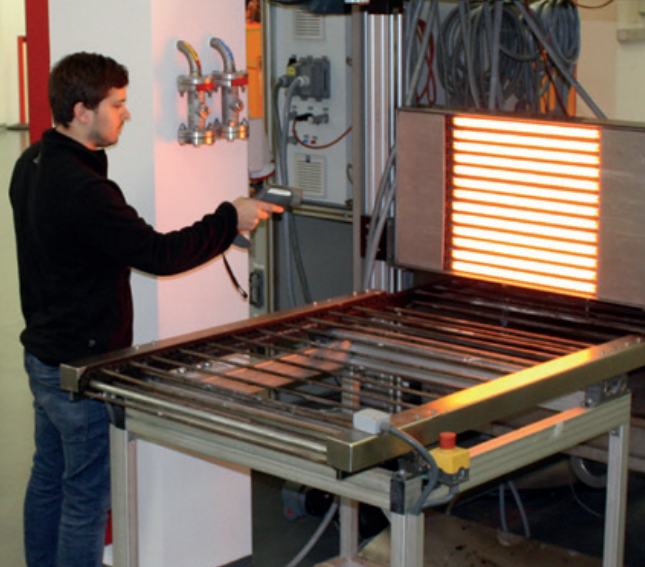
Here’s the thing about IR: it doesn’t mess around with the air. We use high-wattage quartz elements that beam radiant energy straight onto the wafer surface. No more waiting around for a resistive heater to slowly climb to temperature.**It’s fast.**Really fast. Your machines spend less time idling and more time actually getting work done, which makes the whole workflow feel a lot smoother.
Getting the Precision Right
We don’t just blast the material with heat. We target the specific absorption bands of the bio-polymers so the heat goes exactly where it needs to. To keep things stable, we use halogen-filled quartz envelopes. We even add special coatings to the quartz. This lets the heat soak deep into the sensor layers without scorching the top. It’s a delicate balance, but it works. If you’re putting these into your own line, just a heads-up: keep your tolerances tight. We use standard connectors so you can swap out a burnt-out lamp in seconds without a headache. But please,**vent your housing.**These lamps get incredibly hot at the terminals. If you block the airflow, you’re going to fry your sockets. Trust me on this one.
Saving Energy (and Your Sanity)
Beyond the speed, there’s a huge win for the environment—and your electric bill. In a cleanroom, forced air is a nightmare because it leaks heat everywhere. Then, your HVAC system has to work overtime to cool that air back down. You’re basically paying twice for the same energy. Switching to IR stops that cycle. Since the heat is radiant, it stays focused on the wafer. Your HVAC doesn’t have to fight the oven anymore, and your total kWh per wafer drops significantly. It’s just a smarter way to run a fab.