
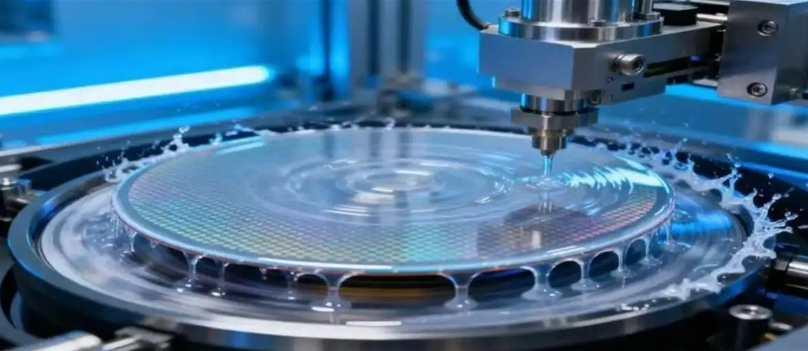
Why we’re swapping hot air for IR in bio-sensor builds
When you’re fabricating bio-sensors, getting the curing and dehydration just right is everything. For years, most of us just stuck with hot air circulation. It’s the old-school way. But the problem is that you’re basically heating up a giant box of air just to get a tiny substrate to the right temperature. It’s slow. It’s tedious. And honestly, it’s a waste of time. The wait is the worst part. That’s where infrared (IR) lamps come in. Instead of warming up the air around the part, IR sends electromagnetic radiation straight into the substrate. It’s like the difference between waiting for a room to warm up and stepping into a beam of sunlight. The “ramp-up” time basically disappears. In deep semiconductor processing, staring at a convection oven waiting for it to stabilize is a total productivity killer. With IR, you hit your target temperature almost instantly. No more lagging. Getting it right on the floor We use high-density energy lamps for this, but there’s a trick to it. You have to tune the wavelength to match the materials in your bio-sensor. This way, you’re curing the active layer without accidentally cooking the carrier plate. But you have to be careful. If you cram too many watts into a small area, you’ll get hotspots. One wrong move and you’ve burned through your delicate bio-coatings. To stop that from happening, we pair the lamps with IR pyrometers and closed-loop PID controllers. It keeps the surface temp locked in within ±1°C. It’s a relief knowing the machine is watching the heat so you don’t have to. The trade-offs (because there’s always a catch) IR is incredibly fast, but it’s directional. Hot air wraps around a part like a blanket, but IR needs a clear line-of-sight. If your sensor has a weird shape or deep grooves, you’ll end up with “shadow zones”—cold spots where the heat just can’t reach. We usually fix this by using reflectors to bounce the radiation or setting up multi-bank lamp arrays to hit the part from different angles. One last thing: your cooling system needs to keep up. Since the substrate gets hot so quickly, you have to pull that heat out just as fast. If you don’t, you’re looking at thermal warping, and that’s a headache nobody wants.